


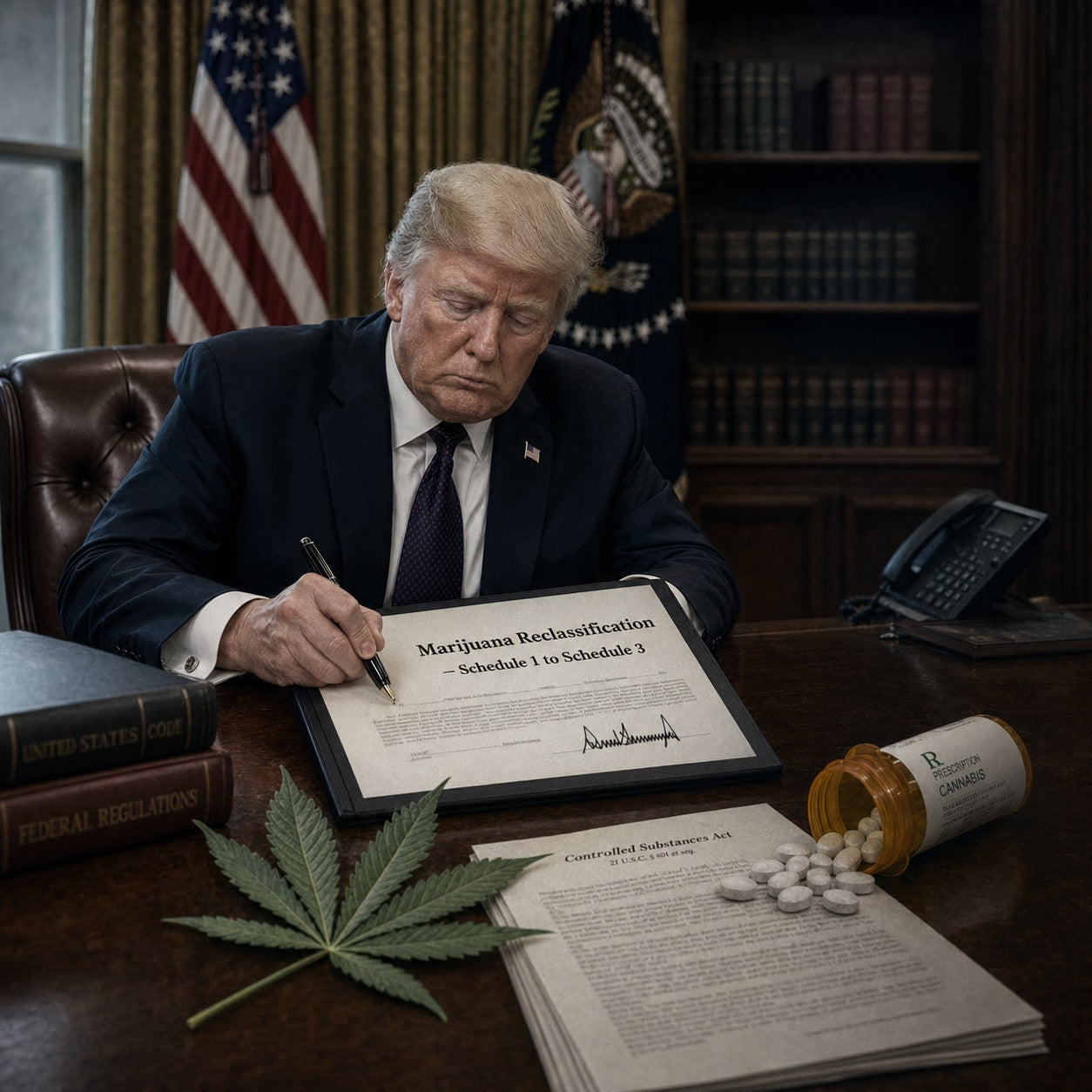
Rescheduling marijuana to Schedule III marks a historic shift in federal drug policy, but many people are understandably asking what it actually means for federal marijuana sentences. The short answer is that it transforms the legal landscape around cannabis, yet it does not, by itself, open prison doors or erase criminal records.
What Rescheduling To Schedule III Actually Means
Under the Controlled Substances Act, marijuana has long been classified as a Schedule I drug, a category reserved for substances deemed to have no accepted medical use and a high potential for abuse. Moving cannabis to Schedule III formally acknowledges that it has recognized medical uses and a lower abuse risk, putting it closer to drugs like ketamine or certain prescription pain medications. This recognition changes how federal law conceptually treats marijuana, shifting it from “most dangerous” status into a category typically associated with regulated, prescribable substances.
However, the core federal criminal statutes that govern marijuana offenses do not automatically change when the drug is moved to a different schedule. Penalties for manufacturing, distributing, or possessing marijuana still depend largely on factors like drug quantity, prior convictions, and whether certain enhancements apply. As a result, rescheduling alters the classification and regulatory framework, but it does not rewrite the penalty provisions on its own.
No Automatic Sentence Reductions Or Mass Release
One of the biggest misconceptions about rescheduling is the idea that it instantly reduces existing sentences or frees people already in federal prison for marijuana offenses. In reality, there is no automatic mechanism in federal law that retroactively adjusts sentences simply because a substance is moved to a different schedule. Judges do not suddenly reopen old cases, and the Bureau of Prisons does not gain new authority to release people purely because of the scheduling change.
For current federal inmates, this means their sentences remain in place unless some additional action is taken. Broad remedies like re-sentencing hearings, automatic expungements, or mass early releases would require either new legislation from Congress or specific clemency actions from the president. Rescheduling may provide a powerful moral and political argument for such steps, but it does not substitute for them.
How Future Sentencing Practices Could Shift
Where rescheduling can have more direct, practical impact is in new and ongoing federal marijuana cases. Even though the statutory penalties are unchanged, classification still matters in how the system operates. Once marijuana is no longer treated as a Schedule I substance, prosecutors and judges gain official backing for the view that cannabis offenses are less severe than those involving higher-schedule drugs.
This can play out in several subtle but important ways. Prosecutors might become less inclined to charge the highest possible amounts or to stack every available enhancement in marginal cases, especially for non‑violent conduct. Plea negotiations could shift toward more modest charges or lower recommended sentencing ranges. At the sentencing stage, judges often consider the nature of the substance involved; knowing that marijuana is now Schedule III can support decisions to impose downward variances or shorter terms compared to cases involving harder drugs.
These shifts do not guarantee leniency in every case, and harsh sentences remain possible, particularly where large quantities, weapons, or organized criminal activity are involved. Still, over time, rescheduling can translate into noticeably lighter outcomes at the margins, especially for lower‑level offenders.
Building A Foundation For Deeper Reform
Perhaps the most significant effect of rescheduling is that it lays the groundwork for more ambitious reforms aimed directly at people already burdened by marijuana convictions. By officially acknowledging marijuana’s medical value and lower risk, the federal government undermines the logic that once justified long, punitive sentences for cannabis-related conduct.
Advocates and lawmakers can use this shift to argue that existing sentences are disproportionate and should be revisited. Future legislation might reduce mandatory minimums for marijuana offenses and make those changes retroactive, allowing incarcerated individuals to return to court for re-sentencing. Congress could also craft expungement or record‑sealing laws tailored specifically to federal marijuana convictions, following the example of many states that have already paired legalization with record relief.
In parallel, the executive branch retains the power to act even without new legislation. The president can direct the Justice Department to prioritize clemency applications from people serving time for non‑violent marijuana offenses, using the Schedule III status as a formal justification for mercy. Targeted clemency initiatives, combined with policy guidance to federal prosecutors, could reduce the number of people entering and remaining in prison for cannabis‑related crimes.
In that sense, rescheduling is best understood not as the end point of reform, but as a pivotal step that makes deeper change both more plausible and more urgent. It changes the official story the federal government tells about marijuana from a uniquely dangerous substance to a regulated drug with medical uses and that narrative shift is precisely what reformers need when they demand that the law finally catch up to reality.





Leave a comment